


From Small Towns to Booming Communities: Three 380-Area Towns in the National Spotlight
Celina, Princeton and Prosper rank among America’s fastest-growing communities, reshaping daily life along the US-380 corridor.
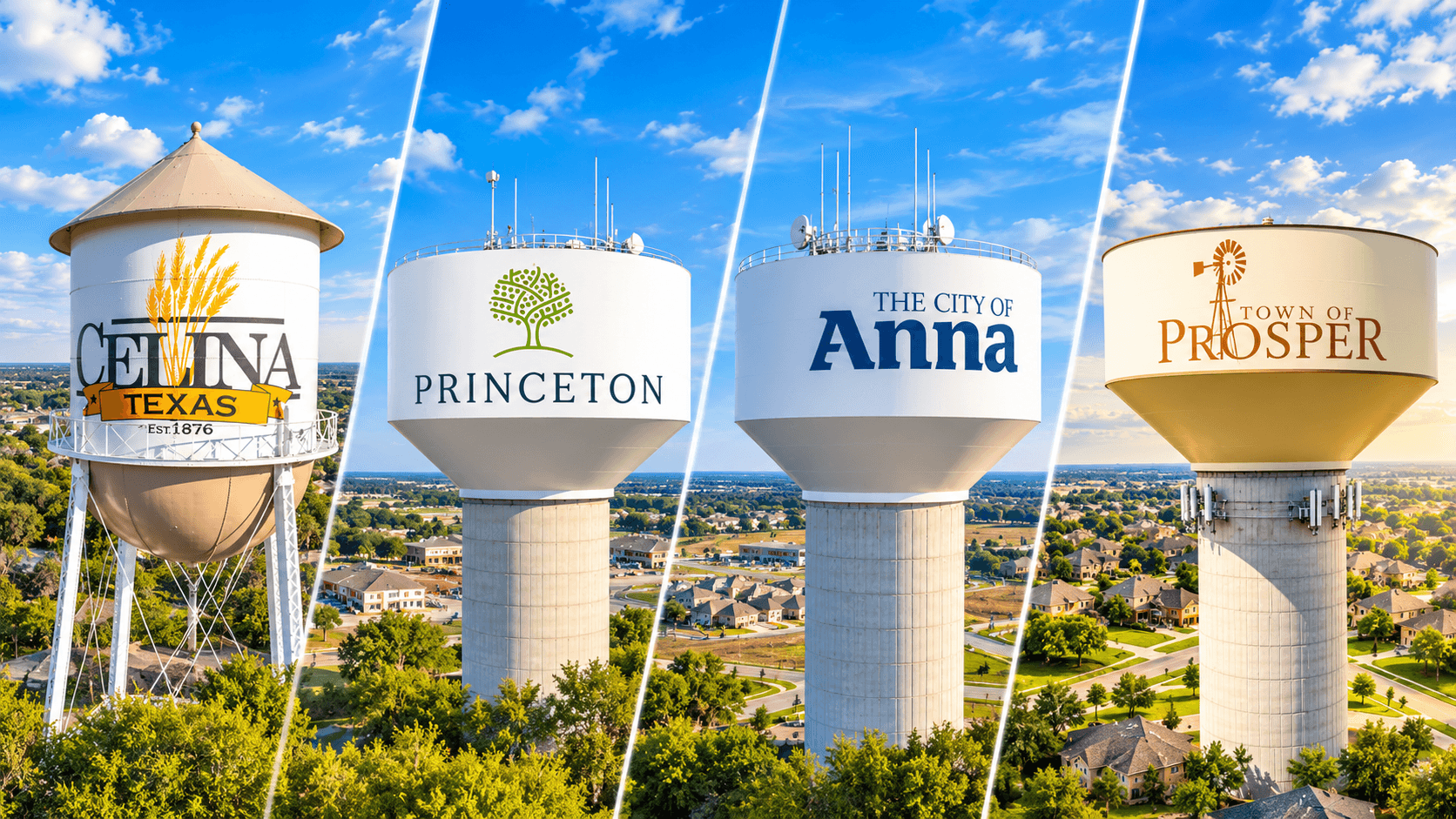
Some of the most dramatic population changes in America are happening close to home. Three communities familiar to US-380 travelers—Celina, Princeton and Prosper—appear in a new WorldAtlas look at American towns that more than doubled in size over a decade. For longtime neighbors and newcomers alike, these numbers help explain why the corridor looks so different than it did just a few years ago.
Celina: from rural crossroads to national growth leader
WorldAtlas reports that Celina grew from 7,380 residents in 2015 to 64,427 in 2025—nearly nine times its earlier population. That 2025 estimate also appears in the U.S. Census Bureau's latest city figures. For the single year from July 2024 to July 2025, Celina ranked No. 1 nationally for percentage growth among cities and towns with at least 20,000 residents at the beginning of that period, growing 24.6%.
A bigger population creates opportunities for shops, services, community programs and employers. It also changes the daily demands on roads, utilities and schools. Celina's challenge is to accommodate the newcomers while protecting the hometown feel that helped attract families in the first place.
Princeton: a US-380 community transformed
Princeton's position on US-380 places it at the heart of the corridor's growth story. WorldAtlas lists its 2015 population at 8,522 and its 2025 population at 43,524, more than five times as many residents. The Census Bureau independently lists Princeton as the nation's third-fastest-growing qualifying city between July 2024 and July 2025, with an 18.1% increase.
For local readers, the change is visible in housing construction, expanding neighborhoods and demand for everyday amenities. Rapid growth can mean more nearby choices for shopping and community life, but also raises practical questions about traffic, infrastructure capacity and how to maintain reliable services as more people move in.
Prosper: growing while preserving a sense of place
Prosper's growth has been less explosive in percentage terms, but no less significant for residents. WorldAtlas estimates a rise from 17,750 people in 2015 to 45,605 in 2025—a roughly 157% increase over the decade. Once associated mainly with farmland and its historic downtown, Prosper is now home to expanding neighborhoods and a much larger community.
The question ahead is not simply how many houses can be added. It's how public spaces, schools, local businesses and transportation can grow together so that new residents and longtime neighbors still feel connected. Prosper's identity will be shaped as much by those choices as by its population count.
A broader North Texas story
Nearby Anna, along US-75 rather than directly on the US-380 corridor, also appears in the WorldAtlas feature. It grew from 11,249 in 2015 to an estimated 35,245 in 2025. In the Census Bureau's 2024–2025 ranking, Anna placed fifth for percentage growth at 10.2%, underscoring how far the Dallas–Fort Worth region's outward growth now reaches.
These aren't interchangeable statistics: WorldAtlas compares 2015 with 2025, while the Census Bureau's national annual ranking compares July 2024 with July 2025 and applies a population-size threshold. Both views point to substantial change, but they answer different questions.
What growth means for the 380 corridor
For people who live, work or operate a business along US-380, population growth is more than a headline. It influences where new restaurants open, how far families travel for recreation, what schools and parks need, and how transportation projects are prioritized. The most important measure may be whether communities can turn rapid growth into lasting quality of life.
As these towns continue evolving, The 380 Connector will follow the people, places and practical improvements behind the numbers—not just the rankings.
Explore the sources and communities
Read the original WorldAtlas feature.
See the Census Bureau's 2025 city growth rankings.
Explore the Census Bureau's analysis of Dallas–Fort Worth exurban growth.
Which corridor towns are featured? The feature focuses on Celina, Princeton and Prosper, with nearby Anna included for regional context.
Which town led national percentage growth in 2025? Celina ranked first among qualifying U.S. cities and towns, growing 24.6% from July 2024 to July 2025.
Why do these population numbers matter locally? Growth affects transportation, schools, utilities, parks, shopping choices and the pace at which communities must expand everyday services. |
Never miss a story.
Get the best of The 380 Connector™ in your inbox — free, no spam.


0 Comments
Join the conversation
Be the first to comment
Share your thoughts above.